
Breast Augmentation Sydney- Implants & Mammoplasty at Form & Face

Specialist Plastic Surgeon
Dr Ben Norris FRACS

Follow-Up Guarantee
Care for the rest of your life

Total Cost of $15,000
All inclusive, no hidden fees
Any implant choice
- All-inclusive price – no hidden fees
- Price includes any implant choice
- Your choice – whether minor or significant breast changes
- High-quality round textured implants included
- Day procedure under general anaesthetic and anaesthetist in an accredited hospital
- Performed by a Specialist Plastic Surgeon
- Breast Augmentation mammoplasty package $15,8000
Breast augmentation (mammoplasty) is one of the world’s most popular and frequently performed aesthetic surgical procedures. Also known as breast enlargement surgery, breast implant surgery, and augmentation mammoplasty, it may be undergone by women who wish to increase the volume of their breasts.
At Form and Face clinics in Bondi Junction and Bella Vista, we are committed to seeing each patient individually and helping them achieve their aesthetic goals. With augmentation mammoplasty, Dr Norris can completely customise the surgery, selecting the most appropriate placement for the implant.
Snapshot: Who is a good candidate for breast augmentation surgery (mammoplasty)?
Suitable candidates for the procedure should be in good overall health and are looking to:
- Achieve fuller, larger breasts
- Balance asymmetrical breasts
- Balance uneven breasts
- Address lost breast volume due to pregnancy, breastfeeding, or ageing.
However, it is important to note that each patient will have a slightly different surgical plan according to their needs, health, and goals. This means outcomes will vary, and you should discuss what can be achieved in your particular case with Dr Norris during your consultation.
Breast Augmentation Mammoplasty Before and After
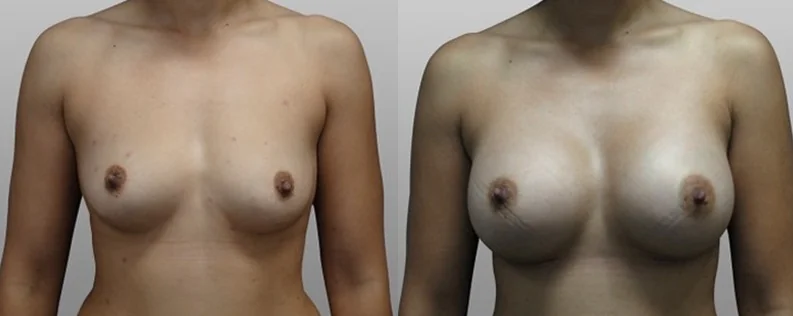
Image 01, Breast Augmentation Mammoplasty (Implants) patient, before and after photos post-op 6 weeks, front view
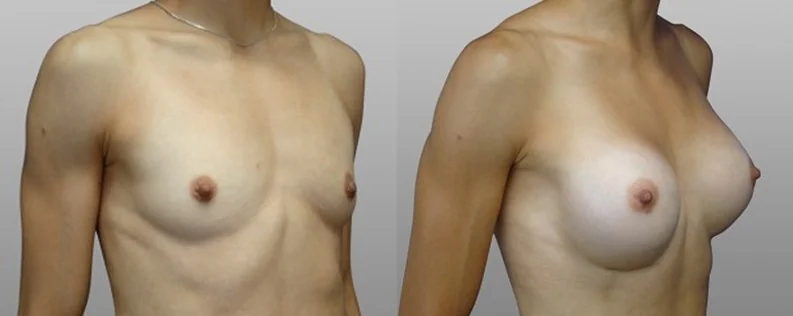
Client 26 : 24yr 295g Round Moderate Profile Submuscular
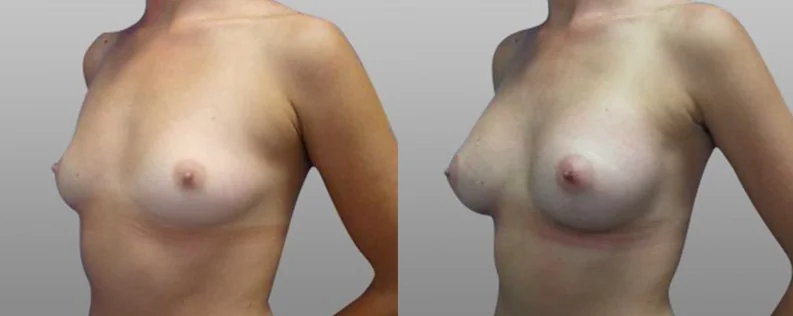
Breast Augmentation Mammoplasty (Implants), patient 20, image 38, angle view, before and after photos post-op 6 weeks
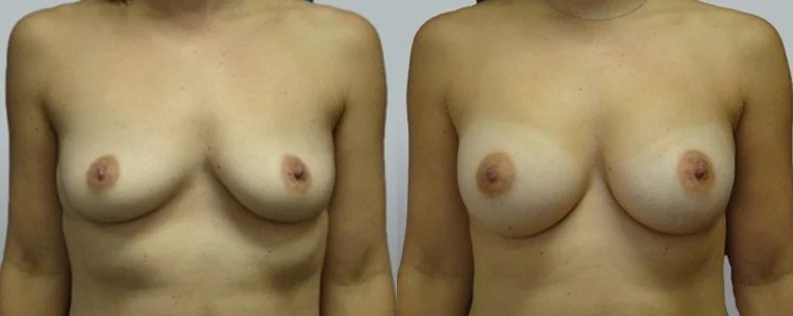
Client 34, 42yr, 335g Teardrop High Profile Sub-muscular
The outcomes shown are only relevant for this patient and do not necessarily reflect the results other patients may experience, as results may vary due to many factors, including the individual’s genetics and lifestyle.
6 Reasons Women Visit Form & Face for Breast Implants (Mammoplasty)
The reasons women visit Form and Face for their breast augmentation mammoplasty surgeries vary. Dr Norris has identified six main reasons for seeking this procedure:
1. Increasing breast size with implants
2. Correcting breast changes related to childbirth with breast implants
3. Correcting breast asymmetry with implants
4. Reconstructing breasts after cancer surgery or preventive mastectomy
5. Changing breast shape with implants
6. Restoring breast volume after weight loss
6. Restoring breast volume after weight loss
Significant weight loss can affect a woman’s breasts. At Form and Face, Dr Norris uses breast implants to help address lost volume after weight loss.
What to expect before breast augmentation mammoplasty surgery?
At your first breast implant surgery (mammoplasty) consultation, Dr Norris will discuss your health, goals, and concerns. He’ll evaluate your breasts, make recommendations, answer your questions and take photographs for a before-and-after record of your surgery.
Visualisation Tools:
During the consultation, Dr Norris may use tools such as implant sizers and 3D imaging technology (where available).
Regulatory Requirements:
In line with Australian regulations, a GP referral is required before proceeding with cosmetic breast surgery. Additionally, all patients must undergo a psychological assessment to ensure suitability and support your wellbeing throughout the process.
On the day of the surgery at a fully accredited medical facility, you will be given medications to ensure your comfort throughout the procedure. Dr Norris performs breast enlargement mammoplasty surgery with general anaesthesia.
How Dr Norris performs breast augmentation mammoplasty surgery?
The first step of surgery is for Dr Norris to make an incision. Based on the type of breast implant, the degree of augmentation, and the patient’s specific anatomy, Dr Norris will choose:
1. Periareolar Incision for Breast Implant
2. Inframammary Incision
3. Transaxillary Incision for Breast Implant.
Dr Norris takes particular care when placing incisions.
Once the incision has been made, Dr Norris is ready to place the implant. As with the type of implant used, placement is determined by factors unique to each patient. Based on those factors, Dr Norris inserts breast implants in one of two spots:
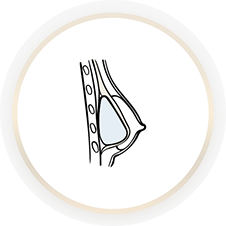
Sub-muscular placement
Under the pectoral muscle

Sub-mammary placement
Over the pectoral muscle and directly
behind the breast tissue
The entire breast augmentation mammoplasty procedure lasts about an hour (though you will be in hospital for about five hours). Surgery concludes with Dr Norris closing incisions with dissolvable sutures, skin adhesive, and/or surgical tape.
What type of breast implants will be used?
There are a few decisions to be made when selecting an implant. Below is a beginner guide to understanding implants:
Implant Brands and Technology:
We offer a range of high-quality breast implants, including brands such as Mentor and Motiva. These implants are available in both round and anatomical (teardrop) shapes, with options for smooth, textured, and polyurethane-coated surfaces. Our silicone gel implants are designed to closely mimic the feel of natural breast tissue and are available in various profiles to suit your body and aesthetic goals.
Surface
- Smooth
- Textured
- Polyurethane (furry Brazilian)
- Ultra High
Profile
- Low
- Moderate
- High
- Extra High
- Ultra High
Shape
- Round
- Anatomical (teardrop):
- Oval Base Anatomical profile inferior lower pole
- Round Base Teardrop profile moderate lower pole
- Oval base Anatomical pole superior lower pole
The most important thing to consider is the implant size you choose. Most women will choose silicone gel implants, which mimic the feel of breast tissue. There is currently no scientific evidence that silicone gel breast implants put you at an increased risk of breast cancer, autoimmune diseases or problems when breastfeeding. These implants may interfere with the interpretation of a mammogram, but this can be avoided if special views are provided during the mammogram. There is evidence to suggest that textured and polyurethane-coated implants help to reduce the risk of the formation of scar tissue (capsular hardening) in the breast pocket around the implant.
Dr Norris will advise you if he thinks you may require two implants of different sizes. Most breasts are asymmetrical, but only some need two different implant sizes. Most implants increase by size in 15-25cc increments. Most women are only 5-10cc different in size between breasts.
Fat Grafting and Hybrid Augmentation
In addition to traditional breast implants, we also offer fat transfer (fat grafting) as an alternative or complement to implants. This technique involves removing fat from another area of your body and injecting it into the breasts to increase volume and shape. Fat grafting can be used alone or combined with implants (hybrid augmentation) for a softer, more natural result. Not all patients are suitable candidates, so Dr Norris will discuss your options during your consultation.
What to expect after breast augmentation mammoplasty surgery?
Dr Norris emphasises how important it is to take good care of yourself following a breast augmentation mammoplasty procedure to ensure that your body has time to heal.
Recovery Timeline:
- Immediately After Surgery : Pain, swelling, and bruising are common. Some patients go home the same day, while others may stay overnight.
- First Few Days : Rest in a semi-upright position. You may experience tightness in the breast area as your skin adjusts.
- First Two Weeks : Wear a postoperative bra and compression bandage for support. Light walking is encouraged. Most patients can return to office work within 7–14 days.
- Weeks 3–5 : Swelling and sensitivity gradually decrease. You may begin light lower-body exercise and resume more daily activities.
- Weeks 6–8 : Most swelling has resolved. You can typically return to normal exercise routines, but avoid heavy upper-body workouts until cleared by Dr Norris.
- After 8 Weeks : Continue to avoid direct sunlight on scars for up to a year, as the skin is more delicate.
Dr Norris will monitor your progress and provide personalised advice throughout your recovery.

Actual patients of Dr Benjamin Norris
Risks and Complications
All surgical procedures carry some risks. Potential complications include:
- Rupture (tear or hole in the implant shell)
- Capsular hardening (scar tissue around the implant)
- Haematoma (blood collection in the breast pocket)
- Infection
- Stretch marks
- Changes in breast or nipple sensation (temporary or permanent)
- Implant displacement or rotation
- Asymmetry
- Scarring (keloid or hypertrophic)
- Breast implant illness (BII)
- Breast implant-associated anaplastic large cell lymphoma (BIA-ALCL)
- Interference with mammography
- Breastfeeding challenges
- Need for revision surgery
We take every precaution to minimise these risks and will discuss them in detail during your consultation.
Breast Implant Longevity and Revision Surgery
Breast implants are not lifetime devices. While many implants last 10–15 years or longer, they may eventually need to be replaced due to rupture, capsular contracture, or changes in breast tissue. Revision surgery is a normal part of the long-term journey for many patients. Regular check-ups and self-examination are important for ongoing implant health.
Breastfeeding and Mammography Considerations
Many women can successfully breastfeed after breast augmentation, especially when implants are placed under the muscle. However, some may experience reduced nipple sensation or milk supply. Please let Dr Norris know if you plan to breastfeed in the future.
Breast implants may obscure some breast tissue during mammograms. Special imaging techniques can be used to ensure accurate breast cancer screening. Always inform your radiologist about your implants.
About Dr Ben Norris: Credentials and Philosophy
Dr Ben Norris FRACS is a Specialist Plastic Surgeon with extensive training and experience in breast surgery. He is committed to providing individualised care, prioritising patient safety, and supporting patients in making informed choices about their treatment. Dr Norris’s approach is centred on education, open communication, and long-term support for every patient.
How much does breast augmentation mammoplasty cost in Sydney?
Many factors can change the cost of breast augmentation mammoplasty surgery, including the type and size of implant used and whether or not the procedure will be combined with a lift. Anaesthetist, hospital and aftercare costs must also be considered before a final cost can be determined. For all Form and Face clients, we offer a breast augmentation mammoplasty package with all-inclusive fees for $15,000. Scheduling a personalised consultation with Dr Norris is the best way to get all the details about the mammoplasty surgery price.
In most instances, breast augmentation mammoplasty is not covered by Medicare or private health insurance because it is deemed cosmetic. However, patients may qualify for a rebate in certain circumstances where a complication has occurred. Overall, the reason for surgery must be deemed medically necessary for it to be covered.
Why Choose Dr Norris for Breast Augmentation in Sydney (Bondi Junction) & Bella Vista?
When it comes to breast augmentation in Sydney & Bella Vista, your choice of clinic and surgeon can make all the difference. At Form & Face, we are committed to delivering safe, natural-looking results and exceptional care at every step of your journey.
Here’s why so many women choose us for their breast augmentation surgery:
Specialist Plastic Surgeon:
Dr Ben Norris FRACS is a highly qualified, Australian-trained Specialist Plastic Surgeon with years of experience in breast surgery. He is known for his meticulous technique, artistic eye, and commitment to patient safety.
Personalised Approach:
Every patient is unique. Dr Norris takes the time to understand your goals, anatomy, and lifestyle, creating a fully customised surgical plan to achieve your desired result.
All-Inclusive, Transparent Pricing:
Our breast augmentation package is $15,000 with no hidden fees. The price includes consultation, any implant choice, anaesthetist and hospital fees, and lifetime follow-up care.
Ongoing Patient Care:
We believe in supporting you well beyond your surgery. Our Ongoing Patient Care means you can always return for advice or care, no matter how much time has passed.
Advanced Techniques and Technology:
We offer a wide range of implant options (including Mentor and Motiva), and use the latest surgical methods and visualisation tools to ensure optimal outcomes and patient satisfaction.
Convenient Sydney Locations:
Our clinics in Bondi Junction and Bella Vista make it easy for patients across Sydney to access expert care in modern, accredited facilities.
Outstanding Patient Support:
From your first consultation through to your final follow-up, our friendly team is dedicated to making your experience smooth, informed, and comfortable.
Choosing Form & Face for your breast augmentation means partnering with a trusted team that prioritises your safety, goals, and well-being. Discover the difference of truly personalised care in Sydney.
Breast Augmentation Mammoplasty FAQs

Breast augmentation, also known as augmentation mammoplasty, is a surgical procedure that increases the size or alters the shape of the breasts using implants. The procedure is performed under general anaesthetic in an accredited hospital. Each patient’s surgical plan is tailored to their specific anatomy and goals.
Breast augmentation refers to the surgical procedure itself, while implants are the devices placed inside the body during that procedure. The surgery may involve placing implants either under or over the muscle to increase size or change shape. The type, shape, and surface of the implant are selected based on a patient’s individual needs. Augmentation is the overall process, and implants are one of the tools used to achieve the result.
The cost of breast augmentation in Sydney varies depending on several factors such as implant type, whether other procedures are combined, and the surgical setting. At Form & Face, a complete package is offered for $14,800, which includes implants, anaesthetist fees, hospital costs, and follow-up care. This price covers all implant types and the procedure is performed in an accredited hospital by Specialist Plastic Surgeon Dr Norris. A personal consultation will give you more details tailored to your circumstances.
Breast implants are not designed to last forever. While there is no set expiration date, implants may need to be replaced at some point due to rupture, changes in breast tissue, or capsular hardening. The likelihood of needing further surgery increases over time. Regular check-ups and awareness of changes are important over the long term.
Yes, breast augmentation involves incisions, and all incisions will leave a scar. The location of the scar depends on the incision method chosen, typically around the nipple, under the breast fold, or in the armpit. Dr Norris will take care to place incisions in less noticeable areas where possible. Over time, most scars fade, but they do not disappear completely.
Many people with breast implants can breastfeed, although this can vary depending on the incision site and how the surgery was performed. Some changes in nipple sensation may occur, but this is not always permanent. It’s important to let Dr Norris know if you plan to breastfeed in the future.
Yes, fat transfer is another method used to change breast volume, often referred to as fat grafting. This involves removing fat from another area of the body and injecting it into the breasts. It may be used alone or in combination with implants, depending on the desired result. Not all patients are suitable candidates for this approach, so it’s best to discuss your suitability during a consultation.
Teardrop implants, also called anatomical implants, have a sloped shape that is fuller at the bottom and narrower at the top. They are designed to create a different shape compared to round implants. The choice between round and teardrop depends on the outcome the patient prefers. There are several base and profile options within the teardrop category.
Most patients are advised to sleep on their back in a semi-upright position during the first few weeks after surgery. Side sleeping is usually okay after about four to six weeks, once healing has progressed and Dr Norris confirms it’s okay. Sleeping on your side too early can affect implant position or cause discomfort. Follow-up appointments are typically the best time to ask about resuming different sleep positions.
You’ll usually be asked to wear a post-surgical bra or compression garment for several weeks after surgery. This helps with support, positioning, and healing. Sleeping without a bra may be possible after six weeks, depending on your healing and Dr Norris’s personalised advice.
Heavy lifting generally refers to anything over five to 10 kilograms or activities that put strain on the chest and upper body. This can include lifting children, heavy bags, gym weights, or even certain household tasks. For the first four to six weeks, patients are advised to avoid these types of movements to protect the healing area. Always follow Dr Norris’s timeline for gradually resuming physical activity.
You should avoid driving until you are no longer taking prescription pain medications and feel comfortable performing all necessary movements. This is usually around one week after surgery, but it can vary. Turning the steering wheel or checking blind spots can strain the chest area early on. Check with Dr Norris to confirm when it is okay to resume driving.
Swelling is a normal part of recovery and can last several weeks to a few months. It is usually most noticeable in the first few days and gradually decreases. The final shape of the breasts settles over time as swelling continues to go down. Wearing your post-op bra and avoiding strenuous activity helps manage swelling.
Back pain after surgery is often related to changes in posture and sleep position. Resting in a semi-upright position can help, and some patients benefit from extra support pillows. Gentle movement, short walks, and posture awareness may also reduce discomfort. If pain persists or is severe, discuss it with Dr Norris to rule out other causes.
Most patients are advised to wear a surgical bra or support garment for six weeks post-surgery. After that, you may be able to switch to a non-underwire bra, depending on how your healing is progressing. Underwire bras are usually avoided for at least three months, as they can interfere with incision healing. Dr Norris will let you know when it’s appropriate based on your progress.
Here at Form & Face, we provide patients with a
Ongoing Patient Care
This means that we will be there for you far beyond the recovery period.
You can rest assured knowing that you can come to us about any
post-surgical concerns for the rest of your life.