
Breast Lift (Mastopexy Surgery) Sydney & Bella Vista
- Elective cosmetic procedure
- Possible Medicare and health insurance rebates
- Day procedure only
A breast lift, also called mastopexy surgery, is performed to alter the shape of the breasts and raise them higher up on the chest wall. This can address concerns about breast laxity without reducing their size.
Laxity and loss of shape tend to occur when the skin loses its elasticity due to gravity, the normal ageing process, pregnancy and breastfeeding, and significant weight loss.
Some women also choose to insert implants (augmentation mammoplasty) at the same time as the breast lift (mastopexy) to help achieve the patient’s goals.
What happens at the first breast lift (mastopexy) consultation?
During your first consultation with Dr Norris, he will focus on what you hope to achieve with this procedure and what you would like your breasts to look like. It may become apparent during this initial consultation that you have concerns not only about the laxity of the breasts but also about the size or loss of volume due to the effects of pregnancy and ageing. If this is the case, you have the option to insert breast implants (augmentation mammoplasty) at the same time that your breasts are lifted with mastopexy surgery. Dr Norris will evaluate your breasts by taking measurements, assessing your skin tone and the condition of your breast and fat tissue, and noting the position and size of your nipple and areola on each side. Photographs will be taken for your medical records.
A graph to show the grade of lax breasts:

You can also expect to have a detailed discussion with Dr Norris about how the operation is performed and where the incisions will be placed. At the end of this initial consultation, you should clearly know what will be possible for you. You will then be provided with a detailed quotation for surgery.
If you decide to proceed with surgery, you must schedule a second consultation with Dr Norris. During the second appointment, a surgery date will be scheduled, and Dr Norris will explain how you should prepare for the procedure.
The outcomes shown are only relevant for this patient and do not necessarily reflect the results other patients may experience, as results may vary due to many factors, including the individual’s genetics and lifestyle.
Breast Lift (Mammoplasty) Photos
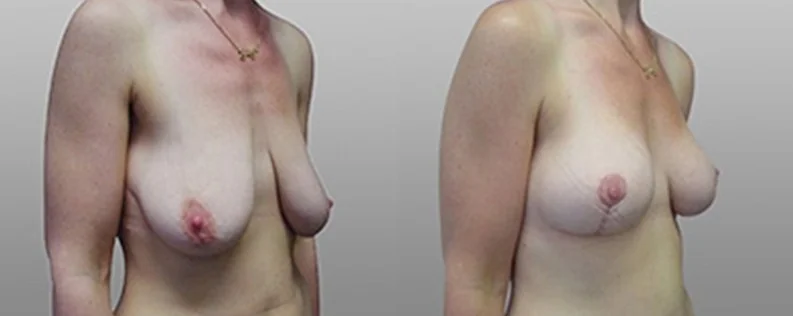
Dr Norris, Breast Lift (Mastopexy) photos, patient 03, image 06, angle view, before and after photos post-op 6 weeks
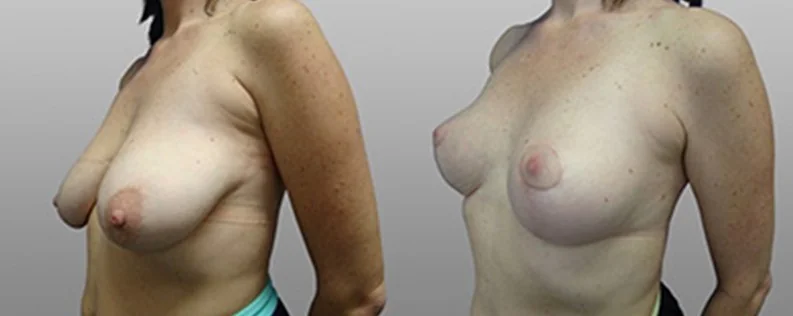
Patient Breast Lift (Mastopexy) before and after photos post-op 6 weeks, Dr Norris, image 11, angle view
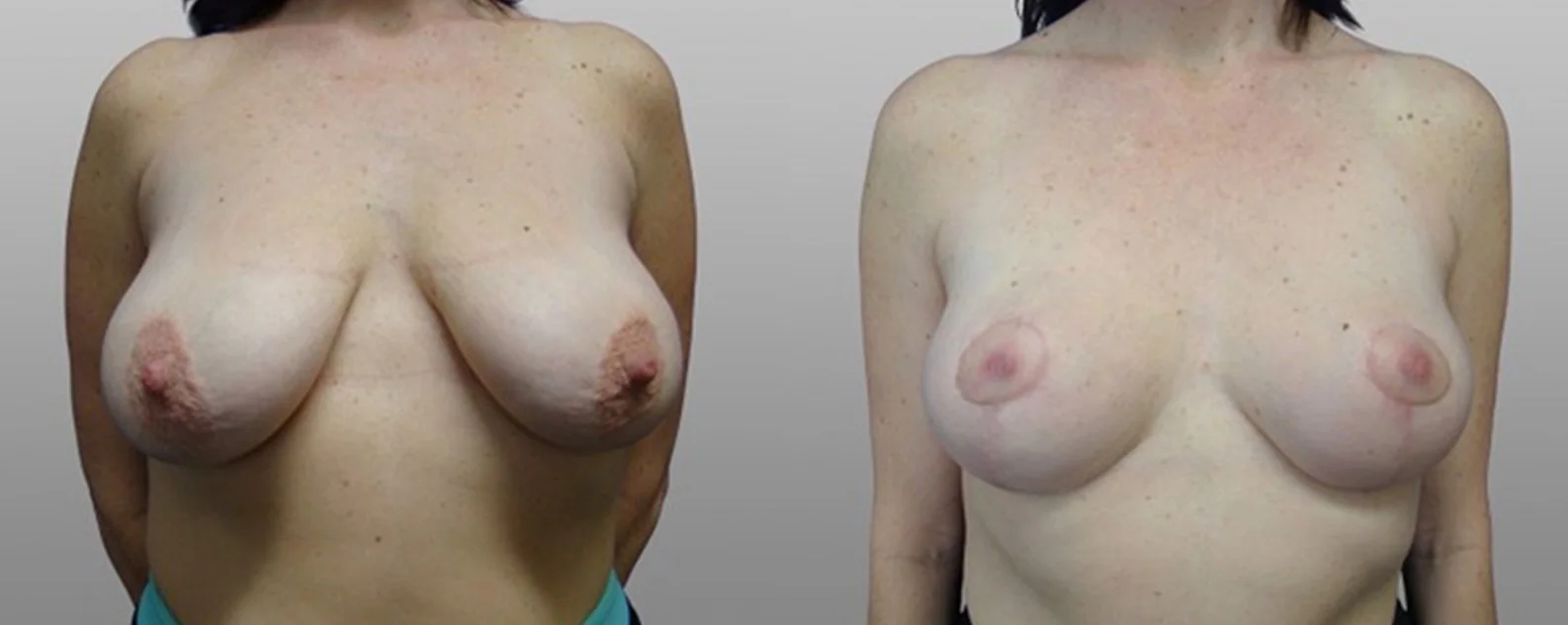
Breast Lift (Mastopexy) before and after photos post-op 6 weeks, patient 05, image 10, front view
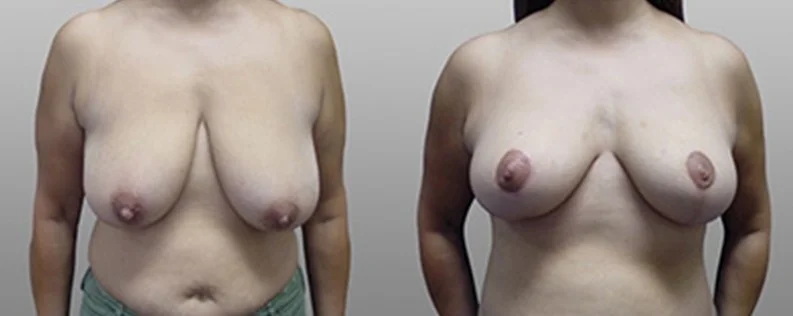
Breast Lift (Mastopexy) surgery, before and after photos post-op 6 weeks, patient 04, image 08, front view
How is a breast lift mastopexy performed?
The breast lift mastopexy procedure will always be performed in a fully accredited hospital. Before the surgery, Dr Norris will pay you one last visit and introduce you to the anaesthetist who will administer your general anaesthetic. The entire procedure will last anywhere from 2 – 3 hours and may require an overnight stay in the hospital – Dr Norris will advise you whether this will be the case during your consultation.
Several techniques can be used to lift the breasts, which will affect where the scars will be present. Dr Norris has trained in using short-scar techniques. However, not all women have breasts that are suitable for a short scar technique.

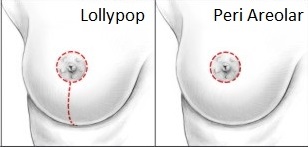
In most instances, the incision will encircle the areola (periareolar scar) and pass downwards from the areola to the fold beneath the breast (vertical scar). This is commonly called a lollipop lift as it resembles a lollipop. In some cases, it is possible only to use a periareolar incision. In other cases, Dr Norris might need to perform a lift using an incision called an anchor. The associated scar from this procedure also travels underneath the breast in the mammary fold, around the areola, and down the breast.
Once the necessary incisions have been made, the excess skin and breast tissue are removed. The nipple may also be repositioned if necessary. Implants will now be inserted through the incision before they are closed using absorbable sutures.
Dr Norris will take you through the various implant options during your consultation. Each implant type has its pros and cons. Choosing the right size for your body shape and goals is also important.
At the end of the operation, a drain may be placed beneath each breast. If this happens, it will be removed the day after surgery. A dressing is also applied over the incisions, and you will leave the hospital wearing your supportive surgical bra, which will help reduce swelling and aid in your recovery.
What happens after the surgery?
- Most patients can go home on the same day as their surgery, but in many instances, an overnight hospital stay is necessary.
- You will require a friend, family member or partner to drive you home from the hospital due to your range of movement being restricted.
- There is also a chance that you will still be slightly drowsy following the anaesthetic.
- Dr Norris will send you home with aftercare instructions, including scar management techniques, as well as a prescription for pain medication and possibly an antibiotic.
- You cannot drive for up to 1 week, so it’s best to make arrangements to get around during this period.
- Daily short showers are permitted, provided your waterproof dressings are dried adequately.
- Patients are encouraged to sleep on their backs, elevated by a few pillows for the first six weeks. This will help reduce swelling and make your recovery more comfortable.
- You will experience the most discomfort in the first 3 or 4 days after the surgery.
- Your breasts and nipples will be bruised, swollen, tender, and sensitive to touch, but this will subside during the first two weeks.
- Most patients can return to work after two weeks, provided their job is not physically demanding. Additional recovery time is required in this instance.
- Swelling can take up to 6 weeks to settle.
- You can start light exercise such as walking after about two weeks. If Dr Norris clears you, you can resume your regular exercise routine after six weeks.
- You will have a follow-up appointment on day three after the procedure to check and change the dressings. Dr Norris will also use this time to ensure you’re on track with your recovery.
Possible complications
- Haematoma – This complication results in excess blood collecting in the breast pocket. This will either be absorbed by the body naturally, or Dr Norris will need to drain it himself. Symptoms include swelling, pain, bruising, skin that is hot to the touch, and itchy breasts.
- Infection – Infection can occur if microorganisms enter the incision sites. Any type of infection should be treated as soon as possible using antibiotics.
- Keloid Scarring – In some instances, scars can begin to look raised, lumpy and even darker in colour. If you notice this, please inform Dr Norris so that he can look at treating the keloid scars with steroid injections. Wearing the supplied silicone gel strips after surgery 24/7 will help prevent this from occurring.
- Numb Nipples – This is a common complication, but it usually resolves in a short period. Sometimes, it may take up to 6-12 months to regain full sensation in your nipples.
- Asymmetry – Even natural breasts aren’t always completely symmetrical, which is why patients need to have realistic expectations before pursuing this procedure. Dr Norris will take every necessary step to help prevent asymmetrical breasts, but there is no way to guarantee this. Most patients can expect to see some minor asymmetry a year after their procedure.
- Breastfeeding Limitations – While breast lifts are not directly linked to any breastfeeding limitations, there is a chance that your ability to breastfeed could be affected. The possibility of this occurring is very much dependent on the technique that was used.
- Implant Rupture – If patients decide to have implants inserted, rupture can be a possible complication. Implant rupturing occurs when the shell of the implant is weakened and tears. In most cases, ruptures are only more likely as the implant ages or if capsular contracture occurs. Capsular contracture is the body’s response to foreign material, resulting in a hard capsule forming around one or both implants. If one breast appears firmer and feels harder than the other, it might be a sign of capsular contracture.
How much does a breast lift mastopexy cost in Sydney & Bella Vista?
The final cost of a breast lift mastopexy will vary between patients. This is because several different factors need to be considered. The amount of skin and tissue that needs to be removed, whether or not implants are required at the hospital, and anaesthetist fees all affect the cost. If certain criteria are met, there is a high chance that patients can apply for a Medicare rebate following their surgery. However, the ptosis must be severe enough to warrant the surgery. Dr Norris will take you through the requirements for a rebate application during your consultation.
Breast Lift (Mammoplasty) FAQs

You might be a candidate for the procedure if you have concerns about breast laxity, where the breast tissue has changed position over time. Factors like pregnancy, breastfeeding, weight changes, and ageing can all affect breast shape and position. During your consultation, Dr Norris will assess your breast anatomy, skin quality, goals, expectations, and overall health to discuss whether this procedure is suitable for you and what it may involve.
The cost of a breast lift in Sydney or Bella Vista can vary based on the surgical plan and where surgery is performed. Fees often include the surgeon, hospital, and anaesthetist, and the total can change if another procedure is done at the same time. After consultation, Dr Norris can provide a written cost estimate so you can see what is included.
When choosing a surgeon for breast lift surgery, confirm they’re a specialist plastic surgeon with the Fellowship of the Royal Australasian College of Surgeons (FRACS). Ask about their experience performing breast lift procedures, their surgical approach, and what results are realistic for your anatomy. Your consultation is the time to discuss their qualifications, ask about risks and recovery, and assess whether you feel comfortable with them as your surgeon.
Preparation for breast lift surgery includes attending your pre-operative appointment, arranging time off work, and organising help at home during your initial recovery. You’ll need to stop smoking before surgery, avoid certain medications and supplements as directed, and arrange transport home after the procedure. Dr Norris will provide you with specific instructions about eating and drinking before surgery, and what to bring on the day.
Breast lift surgery addresses the current position and shape of your breast tissue, but your breasts will continue to change over time. Factors like ageing, gravity, weight changes, pregnancy, and skin elasticity all affect how your breasts look in the years after surgery. The procedure doesn’t stop the natural ageing process. The results can last for years, but the timeframe varies between patients based on individual factors and lifestyle.
Yes, you can have breast implants and a breast lift done together if both procedures suit your anatomy and your goals. During your consultation, Dr Norris will assess whether combining the procedures is appropriate for your situation or if one procedure on its own would be enough to address your concerns about breast position and volume.
Medicare does not usually cover a breast lift done for cosmetic reasons. In some cases, cover may apply when strict medical criteria are met, such as significant asymmetry or functional problems. Dr Norris will explain whether your situation may meet the criteria, and it is also worth checking with your private health insurer about any cover that may apply.
Recovery varies between patients, and it is common to need some time away from work in the early healing period. Activities that involve heavy lifting or strenuous exercise are often limited for a number of weeks. Swelling and bruising can occur and may settle over the first few weeks, while healing continues over the following months. Dr Norris provides activity guidance based on the procedure and how healing is progressing.
After the surgery, you’ll need to sleep on your back with your upper body elevated for the first few weeks. This position helps reduce swelling and keeps pressure off the surgical areas. Use pillows to prop yourself up comfortably. Avoid sleeping on your side or stomach until Dr Norris advises it’s safe to do so. Sleeping in the recommended position supports your healing and helps protect your results during recovery.
Yes, breast lift surgery involves incisions, which means you’ll have scars. The pattern and length of scars depend on the surgical technique used for your anatomy. Scar placement can vary, but it may be around the areola, down from the areola, and along the breast fold. Scars are often red or pink at first and can change in colour and texture over time, though they do not disappear completely.

Here at Form & Face, we provide patients with a
Ongoing Patient Care
This means that we will be there for you far beyond the recovery period.
You can rest assured knowing that you can come to us about any
post-surgical concerns for the rest of your life.